
Posted by Jeff Green on May 4, 2026
Categories: Blog, Business & Leadership, Investment Insights, Team Spotlight
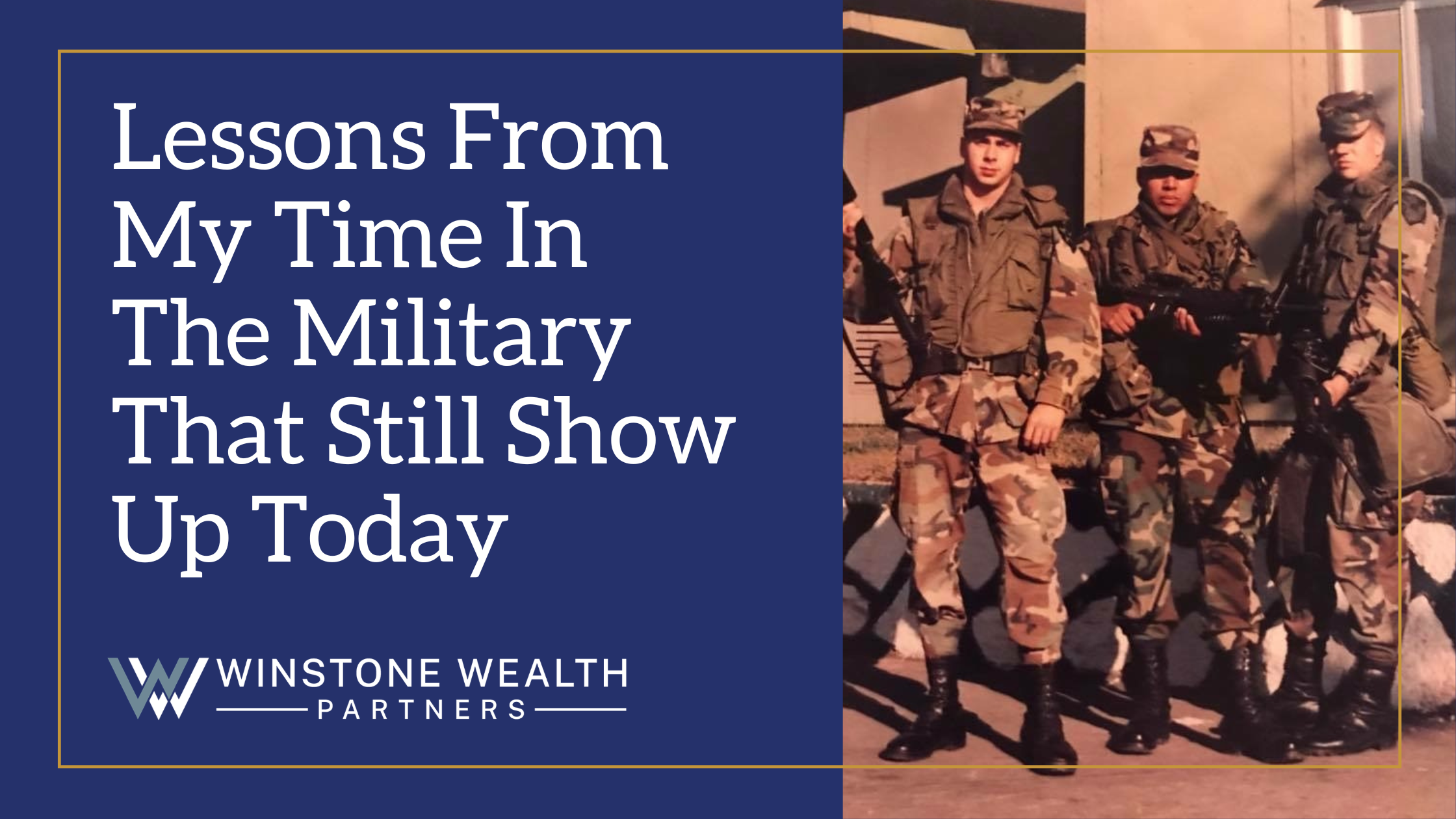
May is Military Appreciation Month. And for me, it’s become more of a reflection point over the years.
The further I get from my time serving, the more I find myself thinking about it. Not in a nostalgic way, but in terms of how much it actually shaped the way I operate today. In business. In leadership. In life. For better or worse.
It’s also a time to step back and recognize the people who are still serving, the families behind them, and those who made the ultimate sacrifice. That part should never get lost.
I don’t spend a lot of time talking about my experience in the Army. But I do find myself coming back to the lessons more often than I probably expected.
So I’ll share a few of the ones that have stuck with me—and still show up in how I approach things today.
Things Are Rarely As Bad As They Feel in the Moment
There’s a night I don’t talk about much that occurred during my service. We were deep in the jungle on a listening and observation post. Pitch black. Visibility was almost zero. My teammates were asleep, and I was on watch.
Around 2 a.m., I heard footsteps.
At first faint. Then louder. Then close enough that there was no question… they were heading straight for me.
I started running through scenarios in my head. Who was out there? How many? What were my options? Is this how it’s all going to end?
I was convinced I wasn’t walking out of there.
Turns out… it was a family of monkeys moving through the jungle.
That’s a true story. And not to be cliché about it, but there’s a lesson there I’ve carried with me ever since.
Things are not always what they seem in the moment. And usually, that means things aren’t always as bad as they seem in the moment.
In business—and especially in investing—I see this all the time. Markets drop. Headlines get loud. Fear takes over. And people assume the worst-case scenario is right in front of them.
As a financial advisor with nearly 30 years of experience… I can tell you, it usually isn’t.
Sometimes the best move is to stay where you are, let the situation develop, and avoid making a permanent decision based on a temporary feeling.
Discipline Transfers—Even When the Environment Changes
People often ask what the transition from the military to business was like.
The truth is, the discipline part translated pretty easily. Showing up on time. Following through. Doing the work whether you feel like it or not. Holding yourself (and others) accountable. That doesn’t change just because the environment does.
What was harder was everything outside of that: living a life with less structure, more ambiguity, and honestly, the feeling that the guys I served with were still out there doing the job while I wasn’t. That took some time to work through.
What helped was finding a new mission. Something to focus on. Something that required the same level of effort and commitment. The discipline I cultivated while serving in the Army helped to bridge that gap.
It’s what keeps you steady when things aren’t clear. It’s what allows you to execute over time, not just when things are going well or on the straight and narrow path.
In my experience, most people don’t fail because they lack a plan. They fail because they lack consistency. Discipline solves that. And I am grateful for the military for helping me hone mine.
Listen to the People Closest to the Work
Early on in my career, I probably leaned a little too hard into the “my way is the right way” mindset. That may work in some environments, but it doesn’t work well on a growing team.
One of the best lessons I carried over from the military is simple: Listen to the man on the ground.
They see things you don’t. They’re closer to the problem. They often have the best answer.
Today, both with my clients and my colleagues, I ask more questions than I give directives. I rely on my team. I trust their judgment. And I’m comfortable saying, “I don’t know, what do you think?”
That’s made us better. And frankly, it’s made my job a lot easier.
Take Ownership of Your Mistakes. Quickly.
In the military, whether you’re boots on the ground or in a more technical role, your team is counting on you. Sometimes that’s literally life or death.
You don’t get to pass blame. You don’t get to make excuses. You own your role, your tasks, and your actions—good or bad—and you move forward.
It took me a while to fully appreciate how much that applies to business.
But the truth is, the concept of ownership is one of the most important things I carry with me today, as a person, as a financial advisor, and as a business owner. It’s also one of our core values at Winstone.
If something goes wrong, we own it. If something needs to be fixed, we fix it. No finger pointing. No excuses.
It’s simple. But it’s not easy. And it matters.
Take Care of Your Mind, Body, and Spirit
In the military, you learn pretty quickly how to operate in less-than-ideal conditions.
Lack of sleep. High stress. Uncertainty. You figure out how to push through because you have to. But that’s not how you want to operate long term.
One of the biggest lessons I’ve learned since then, especially as a business owner, is that you can’t stay in that mode forever and expect to perform at a high level.
At some point, you have to reset.
For me, that means being intentional about taking care of my mind, body, and spirit. Getting outside. Moving my body. Spending time with my family. Stepping away when I need to.
I encourage our team to do the same. And honestly, I’ll say the same thing to clients when I can tell they’re running on empty.
You make better decisions when you’re at your best. And that matters, in life and in business.
Final Thought
I don’t spend a lot of time talking about my military experience. But I’m incredibly grateful for it. It gave me a foundation for how to think under pressure, how to lead, and how to stay steady when things feel uncertain.
It also gave me something else that’s harder to explain—but just as important. A sense of being part of something bigger than myself. Of serving a purpose greater than my own day-to-day responsibilities.
Today, that shows up in a different way—but the mindset is the same. As a financial advisor, helping families plan for their future, make thoughtful decisions, and navigate complex moments in their lives… that’s not something I take lightly. It’s a responsibility.
The mission looks different now. But the idea of serving others, and being part of something bigger than yourself, hasn’t changed.
That’s something I don’t take for granted.